Hidden Costs of a Funeral Wake: What Families Forget to Budget
The funeral package covers the big items, but a layer of smaller customary tokens and red packets is what catches families off guard. A clear, faith-by-faith guide to what to set aside.
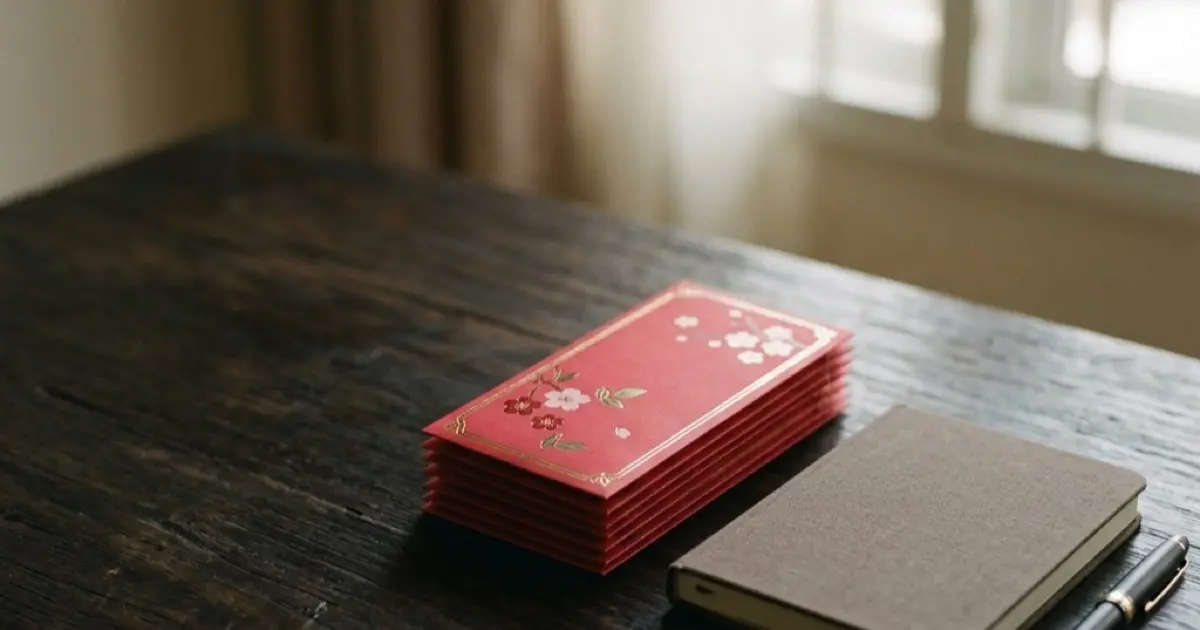
When families think about the cost of a funeral, they think about the two large numbers: the funeral service package and the columbarium niche. Those are the figures that get quoted, compared, and budgeted for. They are also, in my experience, not the costs that catch people off guard.
What catches families off guard is the layer underneath. A series of smaller customary tokens, red packets, and add-ons that rarely appear on any quotation, because they are not things a funeral company charges for. They are things you hand to people, in cash, at the moment, as a gesture of appreciation. Nobody tells you about them in advance, and in the middle of grief they arrive one after another.
This post walks through that layer, roughly in the order you will meet it across the days of a wake. The point is not to alarm you. Most of these are modest, and many are customary rather than compulsory. The point is that a family who knows they are coming can prepare, instead of scrambling for red packets at nine at night.
How to Read This List
Three things worth keeping in mind before the list itself.
First, the amounts. I have deliberately not put figures against most of these, because they vary by faith, by organisation, and by what is customary at the time. The person who can give you a real number is your funeral director. Part of their job is knowing local norms, and a good one will tell you exactly how much to put in each red packet without you having to ask twice. Lean on them for this.

Second, I have tagged each item as usually required, customary, or optional. Customary means most families do it and it is expected, but it is a gesture, not a bill. Optional means exactly that.
Third, keep in mind the other side of the ledger. Condolence money, or 帛金, from guests often offsets a meaningful portion of these smaller costs. I cover that at the end, because a family reading only the costs can come away with a more frightening picture than the reality.
Setting Up the Wake Venue
Most of the setup, the tentage, tables, chairs, fans, lighting, and the casket area itself, is included in your funeral package. The cost that sits outside it is the venue.
Venue arrangements. (usually required, varies by venue) If the wake is held at a funeral parlour, the room is rented and that cost is clear upfront. If it is held at an HDB void deck, there may be a booking and a deposit for utilities, since the tentage, lighting, and refrigeration draw power over several days. Your funeral director handles the booking and will tell you what deposit, if any, applies. This is rarely a surprise once raised, but it is worth raising early rather than assuming the void deck is simply free.
The Encoffining Crew
This is the first of the customary red packets, and the one families least expect.
Encoffining team. (customary) The crew who bring your loved one from the home or the mortuary to the wake venue, and carry out the encoffining, placing the body into the casket, are customarily given a red packet as a token of appreciation. It is a gesture of respect for work that is physically and emotionally demanding, and it is not something that appears on the package quotation. How much to prepare depends on the number of crew and local custom, so ask your funeral director. This is precisely the kind of thing they will advise on without hesitation.
Monks, Priests, and Celebrants
Who leads the wake rituals, and whether there is a token involved, depends entirely on faith. Here is the short version for each.
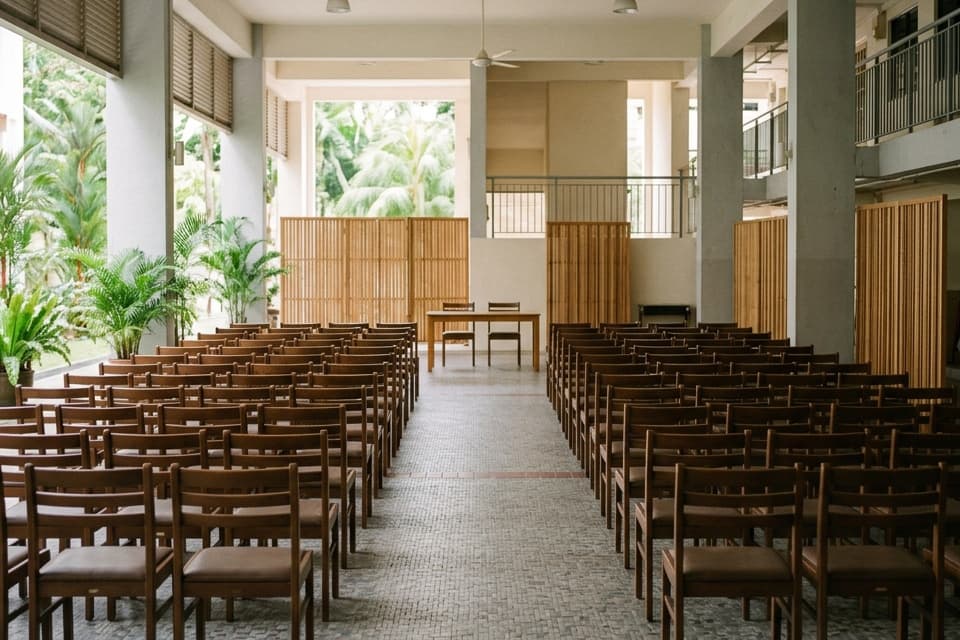
Buddhist and Taoist wakes. (usually included, token may apply) The chanting monks or Taoist priests are typically part of the funeral package. In some cases an additional appearance token is customary on top of the package. Whether it applies, and how much, is a question for your funeral director.
Christian wakes. (varies, often a donation) Services are led by the church, and the pastor conducts them as part of their pastoral role, so there is often no fixed fee. In practice, many families choose to cover the pastor's transport and effort for a one-night service as a gesture. Some pastors will decline this if the person who has passed was a member of their own church. Where the family also requests worship and fuller services, it is customary to give the church a small donation to cover the transport and effort of everyone involved, the pastor, musicians, and worship team together. The amount is a gesture rather than a set charge, so if you are unsure, ask the church directly.
Non-religious and humanist wakes (sometimes called freethinker wakes) (varies, agreed in advance) With no religious body involved, families often engage a celebrant or emcee to lead proceedings. This is arranged and agreed directly, and the cost varies between individuals and organisations. Clarify it upfront so there is no awkwardness later.
Extras During the Wake
This is the category with the widest range, because it depends heavily on faith, family preference, and the scale of the wake.
Performers. (optional, mainly Taoist) Taoist wakes in particular may feature ceremonial performances, flag balancing, stilt walking, mascot or deity performances, and in some cases funeral singers. These are engaged by choice, not by default, and sit well outside the standard package. If this is part of your family tradition, price it separately.
Photographer or videographer. (optional) An increasingly common request, especially where relatives overseas cannot attend. Some families engage someone to quietly document the wake or livestream the key moments. Entirely optional, but worth planning ahead rather than arranging last minute.
Additional food and drinks. (optional, scales with headcount) The package usually covers a baseline of refreshments, but if the wake draws more guests than expected, additional beverages and buffet headcounts are topped up as you go. This is the cost most likely to creep, simply because you cannot know in advance how many people will come each night.
The Final Day: Drivers and Transport
On the morning the cortege leaves for the crematorium, there is a flurry of small tokens that are very easy to overlook, because everyone is focused on the procession itself.
Guest transport driver. (optional, often overlooked) If a bus or coach ferries guests from the wake venue to the crematorium, some families give the driver a small token. It is not expected, but it is a kind gesture of appreciation and goodwill. This is the one families forget most often, because the driver is not thought of as part of the funeral crew.
Hearse driver and funeral escorts. (customary) The hearse driver and the escorts who accompany the cortege are similarly given tokens of appreciation. As with the encoffining crew, your funeral director will advise on the right amount for each.
Extra buses or vans. (optional, scales with guests) If more guests attend the final day than a single coach can carry, additional transport is arranged at added cost.
After the Wake
Two costs sit after the procession has left, and both are easy to miss.
Venue cleaning. (optional, a gesture of goodwill) After a void deck wake, the Town Council cleaners who clear and clean the area are sometimes given a small token. It is not compulsory, and no one will chase you for it. Many families do it anyway, as a quiet gesture of goodwill for work done on their behalf.
Seventh day and later rites. (varies, mainly Buddhist and Taoist) The seventh day prayers, 头七, and subsequent rites sit outside the wake itself, but they follow soon after, and many families are caught off guard by them. For Buddhist and Taoist families especially, these carry their own arrangements and costs. Ask your funeral director to walk you through what follows the wake, so the timeline and the budget do not surprise you.
What Condolence Money Usually Covers
Now the other side of the ledger, because the list above, read on its own, looks heavier than the reality.

Condolence money, or 帛金, given by guests at the wake is a long-standing custom precisely because it exists to help the family defray these costs. In many wakes, the total received offsets a meaningful portion of the smaller tokens, the extra food, and some of the add-ons. It is recorded as it comes in, traditionally in a book, so the family can account for it and reciprocate in future.
I raise this not to encourage anyone to rely on it, but to correct the picture. The customary costs in this post are real, but they do not all come out of the family's pocket in the way the list might suggest. A family that prepares for the tokens and keeps a clear record of condolence money usually finds the two broadly balance out.
What I've Noticed From the People I Sit With
The families who feel most blindsided are rarely the ones who could not afford these costs. They are the ones who had budgeted carefully for the package and the niche, felt in control, and then met a steady trickle of red packets they had not planned for. It is not the amount that unsettles them. It is the feeling of being caught unprepared at the worst possible moment.
I remember one family who had prepared for the niche down to the dollar, and then met four separate red packets across three days they had not anticipated. The money itself was never the problem. The problem was that it fell on a weekend, the banks were closed, and they ended up at a neighbourhood hardware store breaking larger notes into smaller denominations just so the red packets could be filled properly. That small, avoidable scramble, in the middle of grief, is exactly what this post exists to prevent.
The encoffining red packet surprises people most, because it comes so early and so few have heard of it. The final-day drivers come a close second, because by then the family is emotionally spent and focused entirely on the procession. And the seventh day rites catch people who assumed the wake was the end of the arrangements, rather than the middle.
None of this is hidden in the sense of being concealed. It is simply customary knowledge that families only acquire by going through it once. The whole point of asking in advance is that you do not have to learn it the hard way.
A Practical Way to Prepare
If you want a simple way to get ahead of all this, these are the steps I would suggest.
Ask your funeral director for the full picture of tokens. A single conversation covers the encoffining crew, the ritual leaders, and the final-day drivers. Ask what each customarily receives, so you can prepare the red packets in advance.
Prepare the red packets early, once amounts are discussed. If you have already spoken with your funeral director and know the customary amounts, have the red packets ready and labelled before the wake begins, rather than scrambling for cash and envelopes during the days themselves. If the amounts have not yet been discussed, that conversation is the first step.
Clarify faith-specific items upfront. For Christian and Non-religious and humanist wakes (sometimes called freethinker wakes), confirm celebrant or musician arrangements and costs before the wake. For Buddhist and Taoist wakes, ask about appearance tokens and the seventh day rites.
Keep a condolence record. Appoint someone to record condolence money as it comes in. It helps you account for the smaller costs and reciprocate properly in future.
Related Guides
- Is Funeral Pre-Planning Expensive?
- Funeral Services Singapore
- Funeral Pre-Planning Singapore
- End-of-Life Planning Singapore
Final Thoughts
The large costs of a funeral are the ones everyone prepares for. The smaller ones are the ones that linger in the memory, because they arrive unannounced, in cash, at a moment when the family has the least capacity to deal with surprises.
None of them are large on their own. Prepared for in advance, with a funeral director who tells you plainly what to set aside, they become a non-event. Left to be discovered one by one across the days of a wake, they become one more source of stress at a time that already has enough of it. The difference between those two experiences is a single conversation, held early.
Acknowledgements
Special Thanks to Constance Maya Gay, Shirley Goh and Venus Victoria for sharing their field experience for this article.