How to Choose a Columbarium Niche: What to Notice When You Visit
What to look for when choosing a columbarium niche: positioning, height, niche numbers, family grouping, feng shui, tenure, and what a site visit actually tells you.
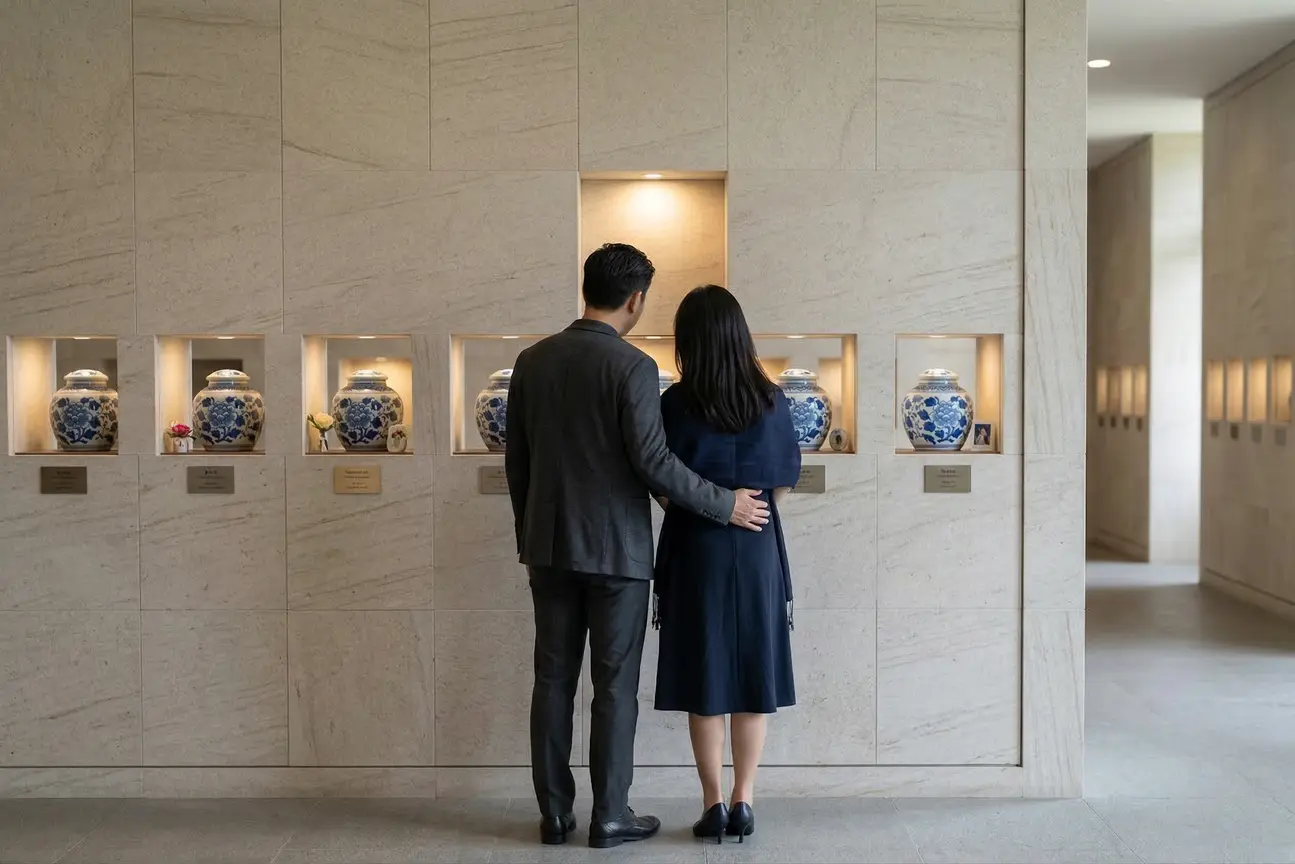
Once you have decided on a columbarium, whether public or private, the next question is which niche. This is the part most families underestimate: within a single facility there can be hundreds of niches across different levels, rows, halls, and price points, and the differences between them affect every visit for years to come.
This guide covers what actually matters when choosing a niche, and what to check before committing.
If you have not yet decided between a public and private columbarium, Public vs Private Columbarium: What the Comparison Actually Involves covers that decision. The Columbarium Singapore Guide provides a broader overview.
The short version: Families spend most of their attention on the niche itself, the height, the number, the exact position, but what actually determines whether visiting feels easy or like a chore years later is the environment: hall cleanliness, lighting, parking, and accessibility. If family members may be placed together over time, raise that at the very first conversation, since adjacent niches get taken and can't be un-taken.
Niche Positioning: Height and Row
The height of a niche is the single most practical factor in the choice, and it affects every visit.
Eye-level niches are the most convenient. Placing offerings, cleaning the tablet, and simply standing in front of the niche to pay respects are all easier when the niche is at a natural height. For families with elderly members who visit regularly, this is often the deciding factor.
Lower niches require bending or kneeling to access. This may not seem significant during the first visit, but over years of regular visits it becomes noticeable, especially for older visitors.
Higher niches may require a step stool or assistance to reach. Some families accept this trade-off for a lower price or a preferred hall location, but it is worth being realistic about whether elderly relatives can comfortably maintain the niche over time.
In government columbariums, positioning choice is limited, especially under sequential allocation where NEA assigns the niche. In private facilities, families generally have more flexibility to choose their preferred level and row.
Niche Numbers
This is something most guides do not mention, but it matters to a significant number of families.
Some families are particular about the niche number itself, the way others care about a house number or a car plate. Numbers like 8, 88, 168, or 188 are favoured for their auspicious associations. Other numbers may be avoided.
Not every family cares about this, but for those who do, it is worth raising early with the provider, because popular numbers go quickly and may not be available on every level or in every hall.
Feng Shui
Feng shui plays a role for some families, though it is not the majority. Roughly one in five of the families I work with factor it into their decision.
The patterns follow dialect and religious lines. Hakka and Cantonese families, for example, sometimes favour higher floors, following the principle of 高高在上, placing the deceased in an elevated position as a mark of respect. Taoist families may have specific preferences about what religious imagery or scriptures are present in the memorial hall, since elements from other traditions can sometimes conflict with Taoist practice.
If feng shui matters to your family, raise it with the provider before the site visit rather than after. Some facilities can accommodate specific preferences. Others cannot, and it is better to know that before you have emotionally committed to a particular hall.
Family Grouping
For families who want multiple members placed together over time, this is the consideration that needs to happen earliest, because it gets harder to arrange later.
Adjacent niches allow family members to be placed side by side within the same row or section. If this matters, it is worth securing the niches while they are available rather than assuming the same positions will be open years later. Some providers offer interest-free instalment arrangements that make this more manageable.
Family suites are a more structured option offered by some private facilities. A typical suite might hold six double niches, with tablets and urns included, keeping an extended family within a single dedicated space. This is the most certain way to guarantee proximity, but it is also a larger commitment upfront.
What goes wrong when this is not planned ahead: the most common situation is a family that places the first urn, then returns years later for a second family member and finds the adjacent niches are taken. At that point the options are limited. Some providers will keep prospect families informed when new positions become available, but that depends on the provider and the facility.
The practical advice is simple: if family grouping matters, raise it at the first conversation, not the second.
Tenure and Maintenance
Two questions families should always ask, and often do not until it is too late.
Tenure: how long does the niche arrangement last? Government columbariums operate on a licence basis and are not freehold. Private facilities vary: some offer freehold ownership, others operate on long-term leases. The distinction matters, because "buying a niche" can mean very different things depending on the provider. Ask specifically how many years the arrangement covers and what happens at the end of that term.
Maintenance: is there an ongoing fee, or is maintenance included in the purchase? Some facilities charge a one-time maintenance fee that covers the full tenure. Others charge periodically. Confirm the structure before committing, because a low niche price with a recurring annual fee can add up over decades.
What a Site Visit Actually Tells You
Online research is useful for narrowing options, but the site visit is where the decision usually becomes clear. Several things are difficult to judge from photos or descriptions alone.
Cleanliness and upkeep. How well-maintained are the halls, the common areas, and the washrooms? Facilities that invest in day-to-day upkeep maintain that standard over time. Facilities that are visibly neglected on the day you visit are unlikely to improve.
Lighting and atmosphere. The feel of a memorial hall matters more than most families expect. Some halls are bright and well-lit. Others feel dim or institutional. You will know within a few minutes whether the environment feels right.
Accessibility in practice. Check the lifts, the paths, the parking, and the distance from the entrance to the actual hall. What looks accessible on paper can feel very different for an elderly relative who visits every month.
Crowd conditions. If you can, visit during a weekend or near a peak period such as Qing Ming. The atmosphere during a quiet weekday and a busy weekend can be very different, and the busy version is the one your family will experience most often.
What I've Noticed From the Families I Sit With
The question families ask most often is about price versus row. They want to know what the cost difference is between a higher niche and an eye-level one, and whether the premium is worth it. There is no universal answer, but I find the families who choose based on convenience rather than saving are the ones who express the least regret over time, because the height of the niche affects every single visit.
The other thing I notice is that families almost always underestimate how much the environment matters. During the planning stage they focus on the niche itself. After the first few visits, what they actually talk about is whether the hall was clean, whether it was comfortable to spend time in, whether the parking was convenient. These are not glamorous considerations, but they are the ones that determine whether visiting feels like something the family does willingly or something they have to make themselves do.
For families where grouping matters, the most important thing I can say is: do not wait. Availability changes. Niches that are open today may not be open in a year. If placing family members together is something you care about, treat it as the first conversation, not a future one.
Before You Commit
A short checklist of questions worth asking the provider before signing:
- What is the exact tenure of this niche arrangement? Is it freehold or lease-based?
- What does the maintenance fee cover, and is it one-time or recurring?
- Can I choose a specific niche number, level, and row?
- Are adjacent niches available if I want to reserve for family members?
- What happens if I want to relocate the urn in the future?
- What is included in the price (tablet, engraving, sealing, ceremony)?
Getting clear answers to these before committing saves the kind of surprises that are much harder to resolve after the fact.
Related Guides
- Public vs Private Columbarium: What the Comparison Actually Involves
- Columbarium Guide
- Private Columbarium Singapore
- Can Ashes Be Kept at Home in Singapore?
- Can Ashes Be Scattered Anywhere? What the Rules Actually Allow
Final Thoughts
Choosing a columbarium niche is not just about finding an available slot. The height, the number, the hall environment, the tenure, and whether family members can be placed nearby all shape how the arrangement feels over years of visits.
Most of these are easier to get right the first time than to change later. Take the visit seriously, ask the questions on the checklist, and if family grouping matters, start the conversation now rather than later.